
WELCOME BONUS 300%
UP TO €2000 + 100
FREE SPINS
UP TO €2000 + 100
FREE SPINS
Home → Blackjack
Blackjack at City-Slots: Variants, Rules and Payouts
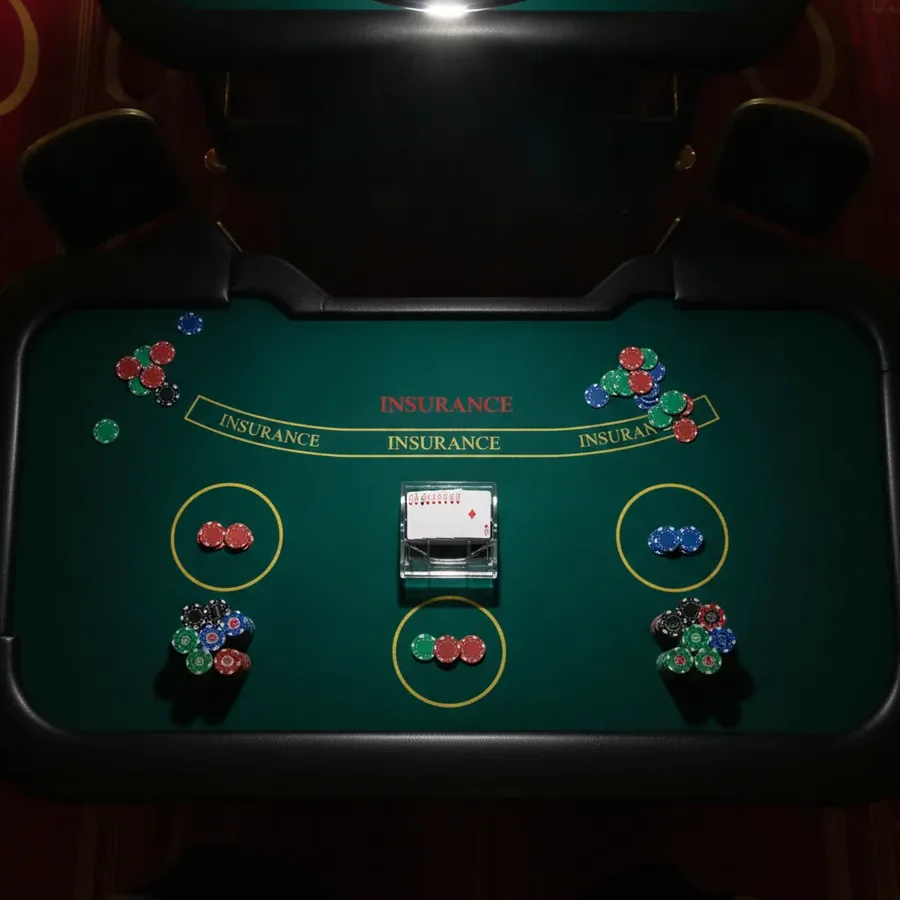
Error insurance: 7 percent additional house edge
The Blackjack Insurance side bet, offered when the dealer shows an Ace, has an RTP of 92.53%, resulting in a house edge of 7.47%. This bet can be up to 50% of the main bet. For reference, standard strategy dictates always declining this bet unless card counting indicates a true count of +3 or higher.
This significantly higher house advantage compared to other game elements makes it disadvantageous for players, especially high rollers who might be tempted by larger side bets. The house edge can be reduced to approximately 5.88% in a single-deck scenario, but it remains substantial.
For a high roller placing a €1,000 main bet and opting for the €500 insurance bet, this 7.47% house edge translates to an expected loss of €37.35 on the insurance alone. This is substantially more than the 0.15% house edge of Blackjack Ein Deck, classic rules.
Split, Double Down, and Surrender in Numbers
Blackjack Surrender, specifically late surrender, offers a rule modifier that can improve RTP by approximately 0.08 percentage points. This allows a player to forfeit half of their bet after the dealer checks for blackjack, providing a strategic option to mitigate losses on unfavorable hands.
The ability to Double After Split (DAS) can improve RTP by approximately 0.14 percentage points, and Resplit Aces (RSA) by about 0.08 percentage points. These rules, when combined with liberal Vegas Strip rules (S17, DAS, Resplit, Late Surrender), contribute to a favorable RTP of 99.72%.
For a high roller playing with €5,000 per hand, strategically utilizing these rules can lead to significant long-term savings. For example, avoiding hands where surrender is beneficial could save a portion of that bet, whereas the absence of DAS would increase the house edge by 0.14%.
What Peek Means with a Dealer Ace
When a dealer reveals an Ace, the 'peek' rule in some blackjack variants allows the dealer to check for a blackjack before players make their decisions on splitting or doubling. This rule is particularly relevant for the Blackjack Insurance side bet, which is offered only when the dealer has an Ace.
The Blackjack Insurance bet itself carries a substantial house edge of 7.47%, with an RTP of 92.53% in 6-8 deck games. Standard strategy advises against this bet unless the player is actively card counting and the true count is +3 or higher, indicating a favorable player situation.
For a high roller betting €5,000, accepting the insurance bet when the dealer shows an Ace, even at a 2:1 payout, would statistically lead to greater losses compared to foregoing it. The 7.47% house edge means an average expected loss of €74.70 on a €1,000 insurance bet.
Ace Split: only one card per hand
In many blackjack variations, splitting Aces typically results in receiving only one additional card per split hand. This rule is standard for games like Blackjack Split / Double / H17, where the outcome of subsequent cards is crucial for improving the hand's value after the split.
While Resplit Aces (RSA) can improve RTP by approximately 0.08 percentage points, the limitation of one card per Ace split can restrict the potential for high rollers to capitalize on favorable situations. This means a split Ace hand cannot be further doubled down on, for instance.
For a high roller splitting Aces with a €2,500 bet, receiving only one card and being unable to double down limits the potential upside of that initial split. This contrasts with games where more flexibility is allowed after splitting, potentially impacting the overall expected return on such hands.
Bonus 100 EUR with 10 percent credit
The welcome bonus offers 300% up to €2,000 plus 100 free spins. A player depositing €100 would receive a €300 bonus, resulting in a total of €400 in their account for play. However, table games, including blackjack variants, only contribute 10% towards bonus wagering requirements.
This means that for every €100 wagered on blackjack, only €10 will count towards meeting the bonus turnover. To fully wager a €300 bonus, a player would need to wager €3,000 on slots (100% contribution) or €30,000 on blackjack (10% contribution).
For high rollers aiming to utilize the bonus on blackjack, the 10% credit rate makes wagering the bonus significantly more challenging. A player seeking to clear a €2,000 bonus entirely through blackjack would need to wager a substantial €20,000, significantly impacting the perceived value for table game enthusiasts.
Blackjack variants at a glance
| Variant | Payout | House edge | Rule | Bet range |
|---|---|---|---|---|
| Blackjack Surrender (Late Surrender) – Regel-Effekt | n.a. (Regel-Modifikator) | −0.08 Prozentpunkte | Spieler gibt Hand nach Dealer-Blackjack-Prüfung auf, verliert die Hälfte des Einsatzes. Verbessert RTP um ca. 0.08 Prozentpunkte. Early Surrender ist wesentlich wertvoller (bis −0.6 Prozentpunkte), aber extrem selten. | Rückzahlung 50% des Einsatzes |
| Blackjack Split / Double / H17 – Regel-Effekte | n.a. (Regel-Modifikatoren) | H17 +0.22 Prozentpunkte; RSA −0.08 Prozentpunkte; DAS −0.14 Prozentpunkte | Dealer Hits Soft 17 verschlechtert RTP um 0.22 Prozentpunkte; Resplit Aces verbessert um 0.08 Prozentpunkte; Double After Split verbessert um ca. 0.14 Prozentpunkte; 6 Decks statt 8 – ca. 0.02 Prozentpunkte. | Double – Einsatz ×2 mit einer Karte; Split – bis 4 Hände; Ass-Split meist mit einer Karte. |
| Blackjack Liberal Vegas Strip (liberale Regeln, 3:2) | 99.72% | 0.28% | Günstigste Regelkombination: S17 + DAS + Resplit + Late Surrender. Standardabweichung 1,15 | Blackjack 3:2, Gewinn 1:1 |
| Blackjack 6 Decks, S17, DAS, DOA, Auszahlung 3:2, Basisstrategie | 99.54% | 0.46% | Dealer steht auf Soft 17; Verdopplung auf jeder Zweierkarte; Verdopplung nach Split erlaubt; keine Aufgabe. Basisstrategie ist für diesen Wert zwingend | Blackjack 3:2, normaler Gewinn 1:1, Insurance 2:1 |
| Blackjack Insurance / Versicherung (6–8 Decks) | 92.53% | 7.47% | Separate Nebenwette bis 50% der Hauptwette, wenn der Dealer ein Ass hat. Basisstrategie schreibt IMMER Ablehnung vor (außer Karten zählen bei True Count ≥ +3). Bei einem Deck Vorteil ≈ 5.88% | Insurance 2:1 |
| Blackjack Ein Deck, klassische Regeln, 3:2 | 99.85% | 0.15% | Weniger Decks = niedrigerer Vorteil; ein Deck gibt ca. −0.48 Prozentpunkte gegenüber 8 Decks. Oft durch 6:5 Auszahlung kompensiert. | Blackjack 3:2, Gewinn 1:1 |
RNG draws cards from virtual eight-deck shoe
Blackjack Liberal Vegas Strip operates with liberal rules and a 3:2 payout for blackjack, offering a high RTP of 99.72%. This variant features a low house edge of 0.28%, achieved through a favorable combination of rules including Standing on Soft 17 (S17) and Double After Split (DAS). For high rollers aiming for optimal returns, understanding these rules is paramount to maximizing potential winnings.
The Blackjack 6 Decks variant, adhering to standard strategy, presents an RTP of 99.54% with a house edge of 0.46%. Key rules include the dealer standing on soft 17 and the allowance for doubling down after splitting (DAS), alongside doubling on any two cards. This configuration is designed to offer a competitive edge for players who master basic strategy.
Players engaging with these RNG blackjack variants can expect a consistent and statistically sound gaming environment. The liberal rules in Blackjack Liberal Vegas Strip, such as resplitting and late surrender, contribute to its superior RTP. These elements are crucial for high rollers seeking to leverage favorable conditions in their gameplay.
How many decks are in the shoe?
Blackjack Liberal Vegas Strip utilizes an eight-deck shoe, contributing to its high RTP of 99.72% and a low house edge of 0.28%. The number of decks can influence the overall house edge; a reduction in decks, when combined with other favorable rules, can further decrease the casino's advantage. High rollers often seek tables with fewer decks when possible.
The Blackjack 6 Decks variant, as its name suggests, employs six decks in its shoe, resulting in an RTP of 99.54% and a house edge of 0.46%. While an eight-deck shoe is common, a six-deck shoe generally offers a slightly lower house edge if other rules remain constant. This distinction is important for strategic players.
The Blackjack Insurance side bet, when played with six to eight decks, carries a significant house advantage of 7.47% with an RTP of only 92.53%. For high rollers, consistently avoiding this side bet is a key strategy, as it is designed to be unfavorable in the long run, irrespective of the number of decks used.
One Deck vs Eight Decks in House Edge
A theoretical Blackjack game with a single deck and classic rules, offering a 3:2 payout, boasts an exceptional RTP of 99.85% and a minimal house edge of 0.15%. This is a significant advantage compared to multi-deck games, demonstrating how fewer decks can dramatically reduce the casino's edge. High rollers often prioritize single-deck variations when available.
In contrast, an eight-deck shoe can increase the house edge by approximately 0.48% compared to a single-deck game, assuming all other rules are equal. This difference highlights the substantial impact deck count has on game fairness and potential player returns. The Blackjack Liberal Vegas Strip, using eight decks, still maintains a competitive edge due to its liberal rules.
The Blackjack Auszahlung 6:5 variant, played with six decks, significantly increases the house edge by 1.85% compared to a 3:2 payout. This means for every €100 wagered, the casino retains an additional €1.39 compared to the standard payout. High rollers must be vigilant about payout ratios, as a 6:5 payout drastically alters the game's profitability.
When does the table max bet apply?
Infinite Blackjack tables, offered by Evolution, accommodate an unlimited number of players and allow bets ranging from €1 up to €5,000 per hand. This high maximum bet limit is particularly appealing to high rollers who wish to place substantial wagers. The game also features four side bets: Any Pair, 21+3, Hot 3, and Bust It.
Lightning Blackjack, also from Evolution, permits bets from €1 up to €2,500 and incorporates the appealing feature of Lightning multipliers that can increase winnings on a hand by up to 25x. While the maximum bet is lower than Infinite Blackjack, the potential for amplified payouts attracts players looking for high-stakes excitement.
Blackjack Party tables, hosted by two presenters, have a betting range from €1.00 to €1,000. While this table maximum is lower than the other live blackjack variants, it still offers a lively atmosphere for players who enjoy social interaction alongside their gaming. High rollers seeking the absolute highest limits would typically opt for Infinite Blackjack.
Blackjack Party runs with two hosts
Blackjack Party distinguishes itself with a vibrant atmosphere, featuring two enthusiastic hosts to guide the gameplay and entertain players. This live dealer variant allows for bets ranging from €1.00 to €1,000, providing a social and engaging experience. The focus here is on entertainment and interaction, alongside the core blackjack gameplay.
The presence of two hosts on Blackjack Party aims to create a lively and engaging environment, differentiating it from more traditional blackjack tables. While the maximum bet is €1,000, the interactive nature of the game is a significant draw for players who enjoy a more social casino setting. High rollers seeking pure statistical advantage might prefer other variants.
Evolution's Blackjack Party provides a unique live casino experience, with the dual host format enhancing player engagement. Bets are accepted up to €1,000, ensuring that even high rollers can participate in this lively variant. The emphasis is on fun and interaction, making it a popular choice for those who appreciate a dynamic game atmosphere.
Bonus conditions often exclude Blackjack completely
The advertised 300% welcome bonus up to €2,000, along with 100 free spins, may not benefit high rollers focused on table games. Blackjack typically contributes only 10% to bonus wagering requirements, meaning a substantial amount of play is needed to clear the bonus. For example, to wager a €2,000 bonus, a player would need to bet €20,000 on Blackjack tables.
This low contribution rate significantly impacts the effective value of the bonus for Blackjack players. While slots contribute 100%, the 10% rate on Blackjack means a €20,000 bet on slots is equivalent to €200,000 on Blackjack for wagering purposes. This disparity makes it nearly impossible for serious Blackjack players to benefit fully from the welcome offer.
Players should carefully review the full bonus terms and conditions before depositing, as many offers are designed with slot players in mind. The house edge on Blackjack, even with favourable rules, makes it a less attractive game for bonus wagering compared to the high RTP slots. Understanding these limitations is crucial for managing expectations and bankroll.
Shoe, Cut Card, and 75 Percent Penetration
Blackjack games utilizing a shoe with 75 percent penetration can significantly alter the house edge. When the cut card is placed at 75% of a 6-deck shoe, approximately 4.5 decks are played before reshuffling. This level of penetration is common but impacts card-counting strategies negatively.
The house edge in Blackjack is sensitive to deck penetration; deeper penetration generally favours the player. With 75% penetration in a 6-deck game, the advantage gained from playing out more of the shoe is diminished compared to shallower penetration. This means fewer opportunities for skilled players to gain an edge.
A standard Blackjack game with liberal rules like S17, DAS, and 3:2 payouts can have a house edge of around 0.46%. However, the cut card placement and shoe composition are critical factors that can adjust this edge, especially for those employing advanced playing techniques.
Set session stop after 30 percent loss
For high rollers, implementing a session stop loss of 30% on their bankroll is a prudent risk management strategy. If a player starts with €5,000, a 30% loss would equate to €1,500, meaning play should cease if the bankroll drops to €3,500.
This disciplined approach helps prevent significant depletion of funds during unfavourable sessions. For instance, a bankroll of €10,000 would necessitate stopping play once it reduces to €7,000, thereby safeguarding a substantial portion of the initial capital.
Adhering to a pre-determined stop loss, such as 30% of the session bankroll, is essential for maintaining long-term playability. This strategy is particularly important in games with inherent house edges, like Blackjack, where variance can lead to rapid swings.
Double Down vs Simple Hit on 11
In many Blackjack variants, the decision to double down on a hand totalling 11 is a key strategic element for players aiming to maximize winnings. Standard rules dictate doubling down on 11 when the dealer shows a low card, as this offers a strong statistical advantage.
When a player holds an 11 against a dealer's upcard of 2 through 10, doubling down offers a better expected outcome than simply hitting. For example, with an 11, drawing a 10-value card results in a strong 21, a highly favourable outcome. This move capitalizes on the high probability of improving the hand.
Conversely, choosing to 'hit' instead of doubling down on 11 when it is strategically optimal reduces potential gains. The optimal play involves maximizing the bet when the odds are in the player's favour, which is precisely the case when holding an 11 against most dealer upcards.
Four hours of play with 300 EUR bankroll
Playing Blackjack for four hours with a €300 bankroll requires careful bet sizing to ensure longevity. A common strategy suggests betting no more than 1-2% of the bankroll per hand, which translates to €3-€6 per bet.
At a €6 bet per hand, a player could theoretically play approximately 50 hands before depleting their initial €300, assuming no wins. This conservative approach allows for extended play, even with a modest bankroll, by mitigating the impact of individual losing hands.
However, games like Blackjack Auszahlung 6:5, with a house edge of 1.85%, can erode a bankroll faster than games with a 3:2 payout and lower house edges, like some liberal Vegas Strip variants with a 0.28% house advantage.
Contact
Live - online chat
Banking









Providers












Slots City 2026